Wax Paper vs Parchment Paper for Food Packaging
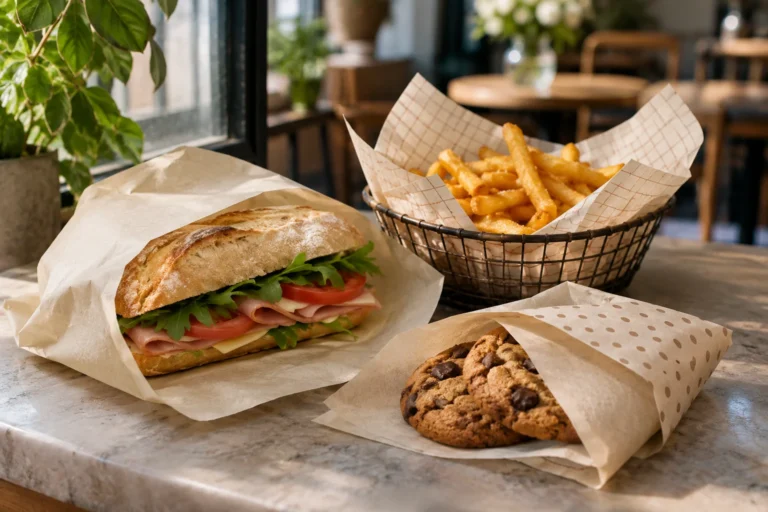
Choosing wax paper vs parchment paper starts with what happens to the food after it touches the sheet. A cold sandwich wrap, a cookie tray liner, and a hot takeout basket have different requirements. Temperature, grease, moisture, and holding time matter more than how similar the papers look.
For a deli wrapping cheese or assembling chilled orders, Cheese Wax Paper may be a useful starting point. For bakery work involving oven heat, parchment is generally the more appropriate material. Before ordering either, match the specific paper to your food and service conditions.
What is the difference between wax paper and parchment paper?
Wax paper uses a wax coating to provide a barrier against moisture and grease. It works well for many wrapping, separating, and lining tasks at room temperature or under chilled conditions. Its key limitation is heat: the coating can soften or melt, making ordinary wax paper unsuitable for oven baking.
Parchment paper is treated to provide a nonstick surface and resistance to grease and heat. Many varieties have a silicone coating, but specifications vary. Parchment intended for baking can handle oven use within its manufacturer’s stated temperature and application limits.
Neither name tells you everything about performance. Sheet weight, coating, food contact suitability, and intended use all affect the result. A sheet that works well beneath a pastry may behave differently when folded around a wet sandwich for delivery.
Compare the conditions your packaging must handle
Heat during preparation and service
For oven baking, choose parchment specifically rated for the equipment, temperature, and cooking method. Keep it away from direct flame, exposed heating elements, and broiler heat unless the manufacturer expressly permits that use. Heat resistance does not mean fireproof.
For wrapping hot food, check the paper’s service guidance separately. A hot sandwich pressed tightly against wax paper can soften its coating. Parchment may be the better candidate, but confirm suitability for direct contact, wrapping, and the expected holding period.
Grease and oil
Wax paper can help contain grease from many chilled or room-temperature foods. Parchment also resists grease and provides useful release for baked goods. Neither should be treated as a guarantee against leaks: folds, seams, food temperature, and oil volume affect performance.
For fried foods, consider airflow as well as grease resistance. Wrapping fries tightly can trap steam and soften their crust, even when the sheet prevents oil from reaching the outer container. A loosely lined basket may serve the food better than a sealed wrap.
Moisture and condensation
Wax paper’s coating can help slow moisture transfer, but a folded sheet is not a watertight package. Parchment is also not a substitute for a leak-resistant container. Dressings, juicy fillings, and condensation can challenge either material during a long delivery trip.
When packing wet foods, use an appropriate outer container and consider placing sauces separately. Test the complete package, including the lid or bag, because trapped steam often changes performance after pickup.
Which paper fits your menu?
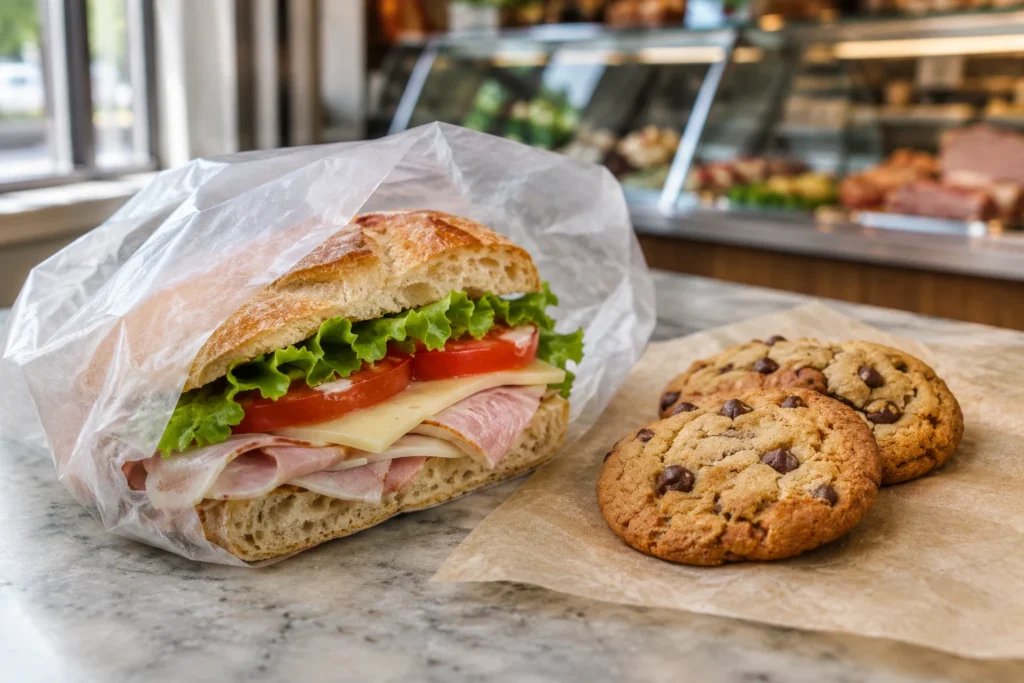
- Cold deli sandwiches: Wax paper can suit wrapping and handling when the filling is not excessively wet. Check fold security and moisture transfer over your normal holding time.
- Cheese portions: Choose paper intended for the particular cheese and storage conditions. Ask about moisture control and breathability instead of assuming all wax-coated papers perform alike.
- Cookies and pastries: Parchment can serve as an oven liner when rated for baking. For packaging cooled items, either paper may work, depending on grease, sticking, and presentation.
- Hot sandwiches: Consider suitable parchment and test it with the actual filling temperature. Account for steam and use supporting packaging when necessary.
- Burgers and fried sides: Evaluate grease resistance, ventilation, and service time together. Test for sogginess as well as staining.
- Bakery layers and separators: Compare how easily each sheet releases from your product without lifting toppings or leaving residue.
Choose sheet size and printing around the job
A paper that performs well can still slow service if the sheet is too small or awkward to fold. Measure the finished food, allow room for overlap, and practice the wrapping motion your staff will use during a rush. For baskets and trays, check that the liner covers contact areas without overwhelming the food.
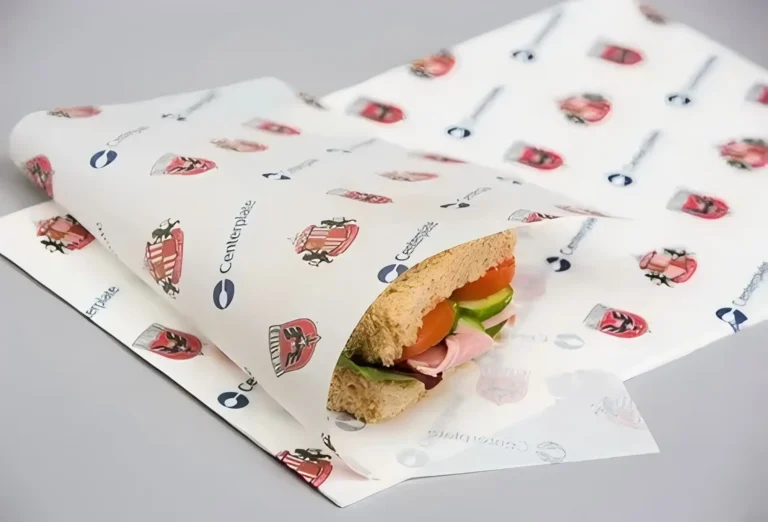
When reviewing Custom Printed Papers, identify the material before choosing the artwork. Custom Parchment Paper and custom wax paper should be selected around their intended use, with printing suited to the food contact and temperature conditions involved.
A repeating logo pattern can remain visible across different folds and portions. Keep critical information on a separate label when customers must read it clearly; a folded or grease-marked wrapper is an unreliable place for essential instructions.
Run a practical packaging trial
Before placing a larger order, evaluate the proposed paper under your normal service conditions. Use the same portions, temperatures, containers, and packing sequence your team uses every day.
- Pack representative menu items. Include a greasy item, a moist item, and a delicate item if those appear on your menu.
- Check at realistic intervals. Inspect immediately after packing and again at your typical pickup or delivery time.
- Look beyond appearance. Check sticking, tearing, coating changes, grease transfer, condensation, and food texture.
- Ask staff to wrap several orders. Note whether sheets separate easily, fold securely, and fit the serving container.
For disposal, check local collection rules and the paper’s documented material details. Coatings and food residue can affect acceptance. Do not assume either wax paper or parchment belongs in curbside recycling or a compost stream simply because its base material is paper.
Frequently asked questions
Can wax paper replace parchment paper in the oven?
Ordinary wax paper should not replace baking parchment in the oven. Its coating can melt or smoke. Use parchment rated for your cooking method and follow the manufacturer’s temperature limits and placement instructions.
Is parchment paper always better for takeout?
No. Suitable wax paper can work well for cold or room-temperature wraps. Parchment may fit hotter applications, but takeout performance also depends on moisture, ventilation, folds, and holding time. Compare both against your actual menu.
Can both papers be printed with a logo?
Printed Wax Papers offers custom wax and parchment paper with customer logos using food-safe inks. Specify the intended application so the paper and printing can be matched to the job.
Choose paper that fits your service
Printed Wax Papers offers custom papers with minimum orders from 1,000 sheets. Production takes 7–10 business days after a free digital proof, with free USA shipping taking 3–5 business days.
Share your food type, sheet size, quantity, and logo to request a free quote. Call +1 (347) 352-6440 to discuss your packaging needs.