Deli Sandwich Wrapping Guide for Busy Lunch Counters
Good deli sandwich wrapping keeps fillings contained, gives customers a manageable meal, and helps orders move smoothly through a busy lunch counter. The best method depends on the bread, filling, serving temperature, and time between assembly and eating.
Start with Sandwich Paper suited to the food you serve, then standardize sheet sizes and folding steps around your main menu items. A compact cold sandwich and a hot, sauce-heavy sub need different handling, even when both leave through the same pickup window.
Match the paper to the sandwich
Choose wrapping by performance first. Grease resistance, moisture behavior, flexibility, and suitability for the intended temperature matter more than appearance. Confirm the paper supplier’s recommended uses before putting a material into service.
- Cold deli sandwiches: Use a food-contact paper appropriate for the grease and moisture in meats, cheese, vegetables, and spreads.
- Oily fillings: Consider greaseproof paper when oil migration is the main concern. Check its suitability for the complete sandwich and service conditions.
- Hot sandwiches: Select paper intended for the serving temperature and manage steam during packing.
- Crusty rolls: Choose a flexible sheet that folds around uneven edges without tearing.
- Heavy or overfilled sandwiches: Pair suitable paper with a supportive container when the wrap alone cannot hold the sandwich securely.
Wax paper, deli paper, greaseproof paper, and parchment are not interchangeable in every application. Do not assume a sandwich wrap is suitable for an oven, microwave, or heated holding equipment. Follow the specific material’s use instructions.
Set up a wrapping station that supports speed
Place paper within easy reach of the assembly area, with bags and order labels downstream. Keep wrapping sheets protected from splashes and away from raw-food preparation. Leave enough clear counter space to fold without pushing finished food against nearby equipment.
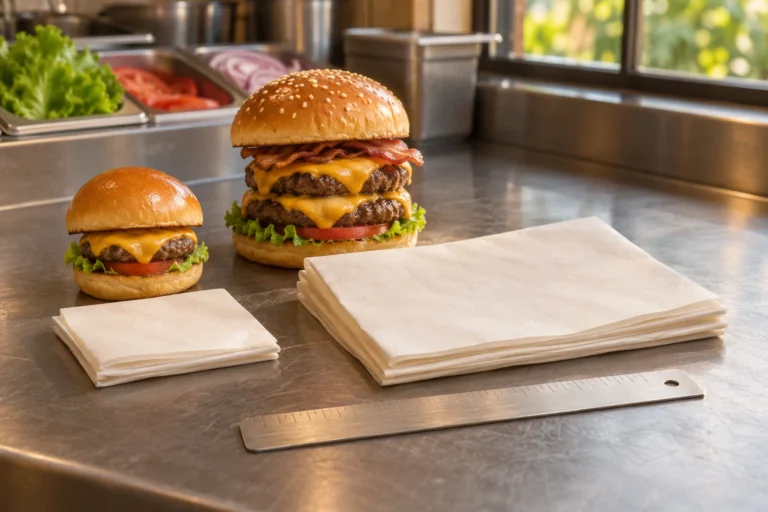
Start with a small selection of sheet sizes matched to your most common sandwiches. Too many sizes can slow decisions; one oversized sheet for everything can create bulky folds and unnecessary waste.
To check the fit, wrap a representative sandwich. The sheet should cover both ends and overlap at the main seam without requiring force. If employees must stretch the paper or compress the bread to close it, move up a size.
Keep supplies in a consistent position
Arrange sheets, suitable closure materials, and bags in the same order at each station. Refill before the rush instead of stacking excess supplies beside food. Keep order identification separate from the food-contact surface.
A repeatable deli sandwich wrapping method
Use this basic method for rectangular sandwiches and short rolls. Adjust the sheet orientation for longer subs, but keep the same goal: contained ends, a secure seam, and enough room to protect the bread.
- Prepare the sandwich. Drain wet toppings and remove loose filling from the work surface. Keep the filling centered so it does not spill into the folds.
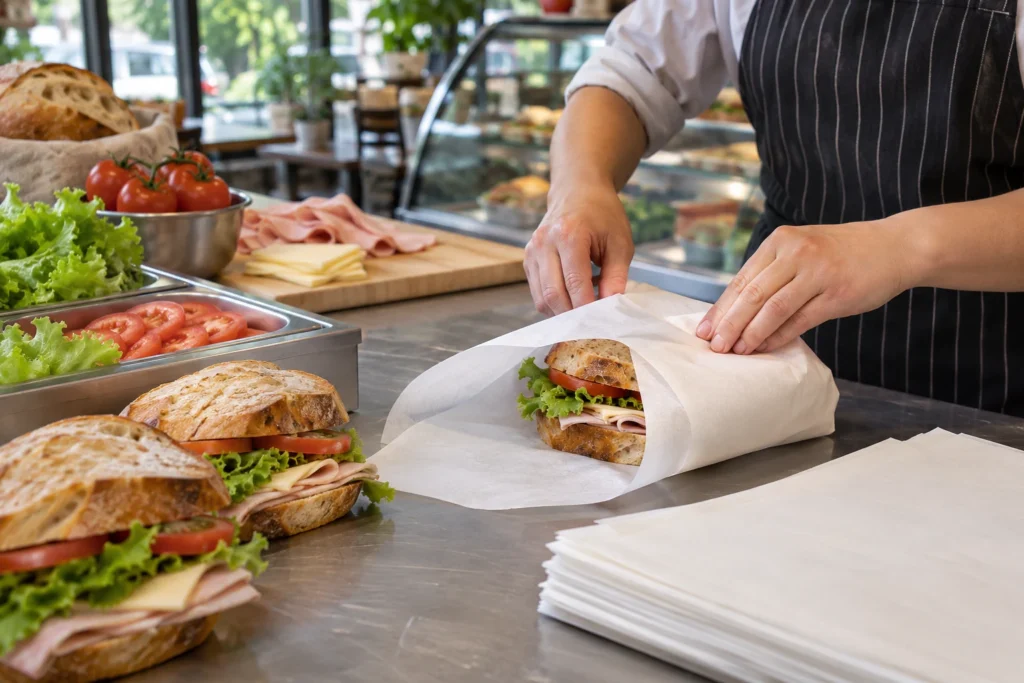
- Position the paper. Lay the sheet flat on a clean preparation surface. Place the sandwich slightly below the center, with its long side parallel to the near edge.
- Bring the near edge over. Lift the paper over the sandwich and tuck it gently against the bread. Apply enough tension to hold the shape without flattening it.
- Fold both ends inward. Bring the left and right sides toward the center. Keep these folds close to the sandwich so loose corners do not catch during bagging.
- Roll toward the remaining edge. Roll the sandwich forward while holding the end folds in place. Finish with the seam underneath.
- Check and identify. Confirm that both ends are covered, then add the order label or appropriate closure to the exterior.
For a long sub, leave sufficient paper beyond each end before starting. If the ends keep reopening, check sheet size and sandwich placement before adding more closure material.
Control moisture before it reaches the wrap
Wrapping cannot correct a sandwich that starts with excessive liquid. Drain pickles, shake excess wash water from greens, and portion sauces consistently. Where the recipe allows, place wetter ingredients between filling layers instead of directly against the bread.
For longer takeout trips, consider packing a particularly wet sauce separately. Tell the assembly team which menu items need that treatment so the decision does not depend on who is working.
Handle hot sandwiches with steam in mind
Steam can soften bread when a hot sandwich is enclosed tightly. Establish a packing method appropriate to the sandwich, wrapper, and holding requirements. Avoid sealing hot food in multiple tight layers simply to make the package look neater.
Any brief venting step must fit your food-handling procedures. Wrapping does not replace temperature control, and sandwiches should not sit on the counter waiting to cool without an established process.
Make branded wrapping easy to use
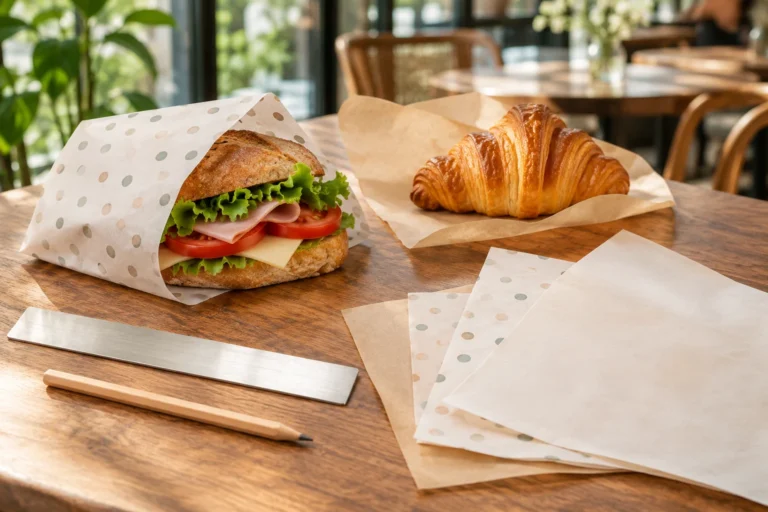
A consistent printed sheet can give orders a recognizable presentation. When reviewing Custom Printed Papers, consider how the design will look after folding, where the seam will land, and whether an order label will cover the main printed area.
A repeating logo pattern can suit several sandwich sizes because individual folds may hide portions of the sheet. Custom Deli Paper should still be selected around the food and wrapping method first. Branding works best when staff can use the sheet naturally.
Check the finished package before the rush
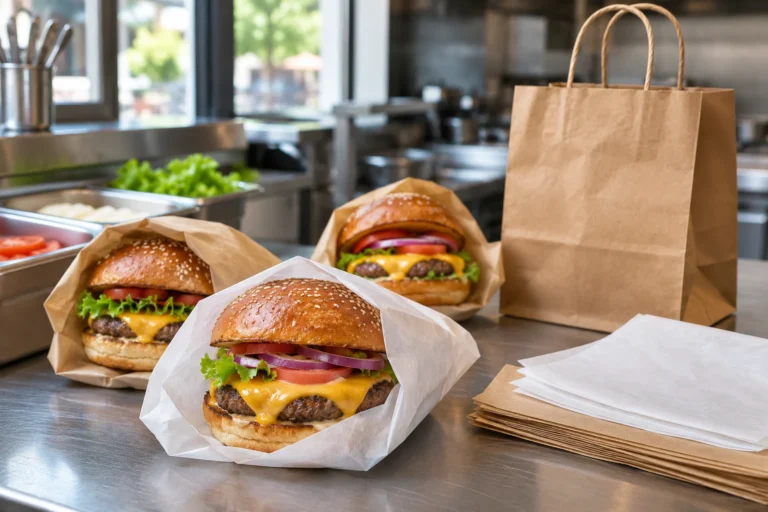
Run a practical trial using actual menu items and your usual takeout bags. Assess sandwiches after a realistic pickup or delivery interval. Check for leaking seams, torn corners, softened bread, and difficulty opening the package.
- Ends open in the bag: Recheck sheet width and end-fold depth.
- Bread arrives compressed: Reduce wrapping pressure and check how bags are loaded.
- Grease reaches the exterior: Review paper suitability and filling portions.
- Customers struggle to unwrap: Reduce excess layers and keep closures simple.
Show staff one finished example for each common format. A short demonstration with a real sandwich makes fold placement and wrapping pressure easier to understand.
Frequently asked questions
What size paper should I use for deli sandwiches?
Choose a sheet that covers both ends and overlaps securely without crushing the bread. Test your standard sandwich and largest regular variation before settling on a size.
Should I cut a sandwich before or after wrapping?
Cutting before wrapping lets you use an appropriate food-preparation surface and inspect the portions. Wrap halves together or separately according to the order. Avoid cutting through paper unless it is specifically suitable for that use.
Can one paper work for every sandwich?
Sometimes, but confirm its suitability across your menu. Hot fillings, oily ingredients, and wet toppings create different demands. Trial each main sandwich type before standardizing.
Plan your next wrapping order
Printed Wax Papers prints custom food-safe papers with customer logos using food-safe inks. Paper orders start at 1,000 sheets. Production takes 7–10 business days after a free digital proof, with free USA shipping taking 3–5 business days.
Request a free quote with your sandwich types, preferred sheet size, quantity, and logo needs, or call +1 (347) 352-6440.