How to Choose Burger Wrapping Paper for Your Menu
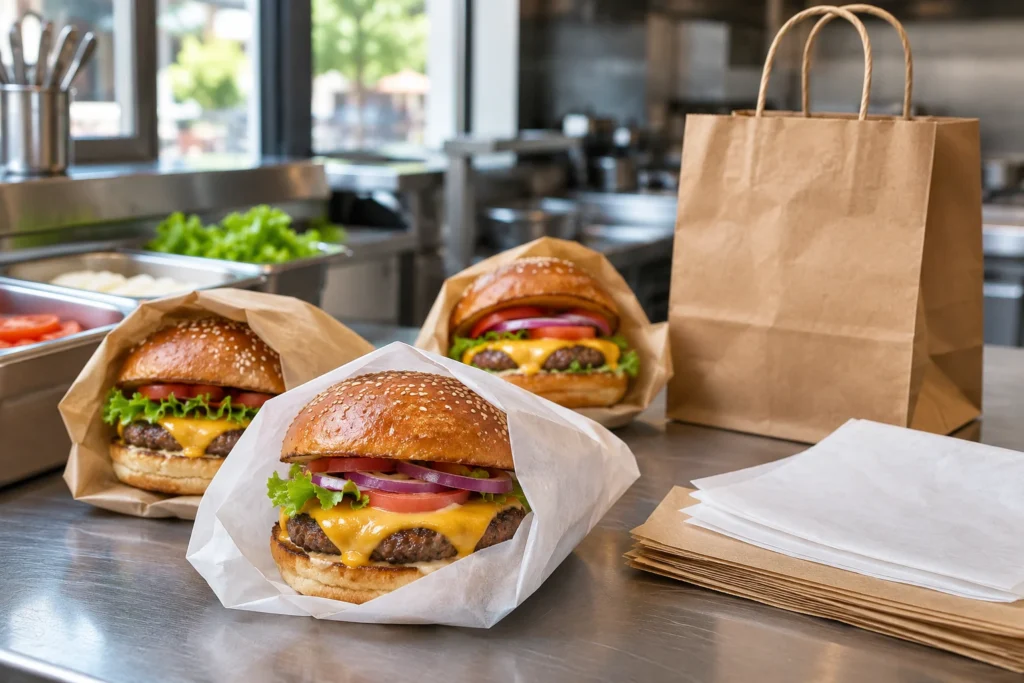
The right burger wrapping paper should make a burger easier to serve, carry, and eat. For restaurant, café, deli, bakery, and food-truck owners, choosing it starts with the food: how greasy it is, how tall it stacks, and how long it stays wrapped.
If you are considering Custom Burger Paper, define those requirements before choosing a logo layout. A sheet that looks good around a simple cheeseburger may behave differently around a double patty with sauce, or during a takeout trip.
Start with your menu and service style
List the burgers you sell, including their buns, toppings, sauces, and typical serving temperature. Include plant-based burgers and breakfast sandwiches if your team will use the same wrapping station for them.
Next, separate counter service from takeout. A burger served immediately in a basket has different packaging needs from one traveling in a bag. Longer holding times give steam, grease, and sauces more opportunity to affect both the paper and the bun.
- Simple burgers: Focus on a tidy fold, comfortable handling, and enough coverage to catch drips.
- Double patties and loaded burgers: Allow more paper for height, overlapping folds, and loose toppings.
- Saucy burgers: Evaluate grease resistance and how the folded paper contains moisture.
- Takeout orders: Check the wrap together with the bag, box, or other outer packaging.
- Basket service: Decide whether the sheet will wrap the burger, line the basket, or perform both jobs.
Compare paper by its intended use
Paper names are a starting point, but they do not tell you everything about performance. Ask whether a proposed material is suitable for direct contact with your food at its serving temperature and for the time you expect it to remain wrapped.
Grease resistance for patties and toppings
Grease-resistant paper can help limit visible oil transfer and keep handling more comfortable. Custom Greaseproof Paper is worth considering when patties, cheese, or fried toppings release substantial oil.
Grease resistance does not automatically mean the paper will contain thin sauces or tolerate every holding condition. Evaluate your messiest burger, including the area where the bottom fold collects drips.
Wax paper for appropriate wrapping applications
Wax paper can be useful for food wrapping, but suitability depends on its construction and the application. Confirm that the specific paper is appropriate for your burger’s temperature and contact conditions. Do not assume wrapping paper is suitable for an oven, grill, or reheating step.
Kraft appearance and other paper options
A kraft appearance may suit a menu with a simple, casual presentation. Color alone, however, does not establish grease resistance or food-contact suitability. Choose performance first, then decide whether a brown or white background presents your branding more clearly.
If you package several kinds of food, review Custom Printed Papers with each application in mind. A pastry liner, deli wrap, and burger wrapper do not necessarily need the same material.
Choose sheet size around the finished burger
Measure the assembled burger, including toppings that extend beyond the bun. Diameter matters, but height can be the reason a sheet fails to close neatly.
Use a plain sheet to try your preferred fold before settling on dimensions. Leave enough overlap to hold the wrap together without creating a thick bundle underneath. Too little paper exposes the food; too much adds bulk and slows opening.
- Assemble a typical burger and your largest regular menu item.
- Position each on the proposed sheet and fold it as staff would during service.
- Check coverage at the sides, top, and bottom.
- Place the wrapped burger in its usual outer packaging.
- Open it after a realistic holding period and inspect the presentation.
Consider whether one sheet size can cover most orders without awkward folds. A second size may make sense for oversized specials, but only if the added stock is easy for staff to identify and manage.
Check steam, handling, and the eating experience
A freshly cooked burger releases steam. A very tight wrap can trap moisture around the bun, while a loose wrap may let ingredients shift. Your folding method should balance coverage with the texture you want at handoff.
Evaluate the complete order under normal service conditions. Look for a damp bun, torn corners, grease showing through the sheet, sauce escaping at folds, or a wrapper that sticks during opening. Check whether customers can peel it back and hold the burger comfortably.
For takeout, include the actual bag and side dishes in your evaluation. A wrap that works at the counter may behave differently inside a closed bag with hot fries.
Design printing around the folds
A repeating logo pattern can keep branding visible when staff wrap burgers in different orientations. Leave enough space between marks so the design remains readable on a small folded surface.
Prepare clear artwork and specify the intended paper background. Fine details and closely spaced elements may be harder to distinguish on a wrapper than on a screen. Use the digital proof to review spelling, logo proportions, spacing, and repeat placement.
Printed Wax Papers uses food-safe inks. Still, confirm the intended food-contact application when discussing your order, rather than treating the ink description as a substitute for checking the finished paper’s suitability.
Plan quantities and replenishment
Estimate sheet use from burger sales, then include other approved uses and normal handling waste. Keep the estimate tied to your own sales records, especially if you are introducing a new menu item.
Printed Wax Papers offers paper orders from 1,000 sheets. Production takes 7–10 business days after a free digital proof, followed by free USA shipping taking 3–5 business days. Allow additional planning time for artwork review and your internal decisions.
Store unused sheets in a clean, dry place, protected from splashes and contamination. If sustainability affects your purchasing decision, ask about the specific material and check local disposal requirements. Coatings, food residue, and collection programs can affect available disposal routes.
Frequently asked questions
What is the best burger wrapping paper for greasy burgers?
Start with a food-contact paper offering suitable grease resistance. Evaluate it with your actual patty, toppings, temperature, and holding time before choosing.
Can one sheet size work for every burger?
Often, one size can cover similar burgers. Tall stacks and oversized buns may need a larger sheet to provide enough overlap without compressing the food.
What should I include in a quote request?
Include your quantity, proposed sheet dimensions, burger types, service method, artwork, and required arrival date. Ask for material guidance if you have not selected a paper.
Choose a wrap that fits your service
Bring your menu requirements and artwork to Printed Wax Papers to discuss custom burger wrapping paper. Request a free quote with your preferred size, quantity, and delivery timeline.